
Properties
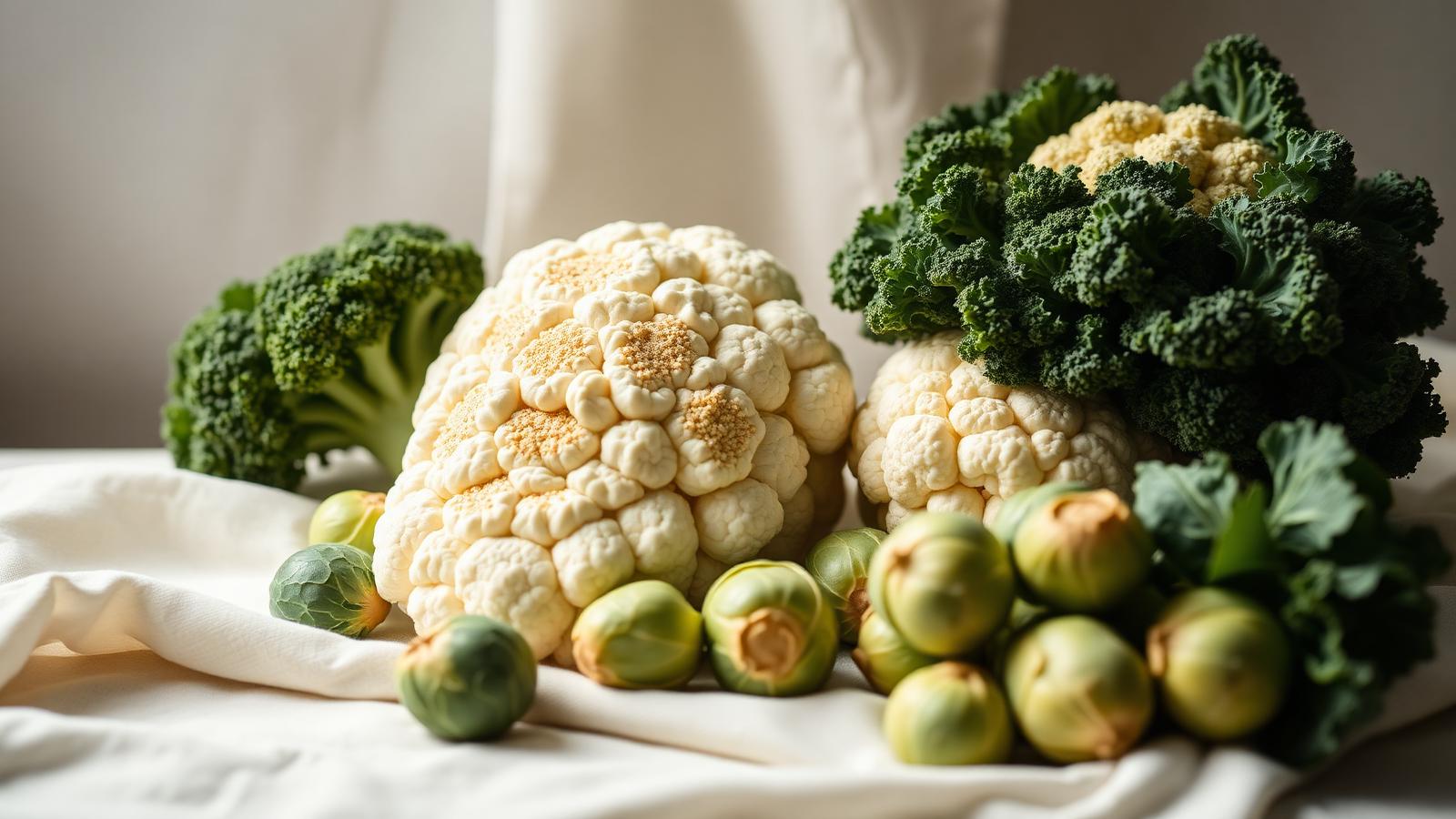
Cruciferous vegetables are members of the Brassica family. They are high in vitamin C, soluble fibre and a variety of other vitamins and minerals. They are rich in phytochemicals, including glucosinolates.
Glucosinolates are converted to isothiocyanates by the action of the enzyme myrosinase. Isothiocyanates have potent anti-inflammatory actions. Myrosinase is deactivated by heat, so consuming cruciferous vegetables raw or lightly steamed preserves their protective properties.
Cruciferous vegetables may interfere with the action of warfarin, so medical advice should be sought. They may also cause bloating in some instances, so quantities should be increased slowly if you have any digestive sensitivities or disorders.
The benefits
Anticancer properties
Sulforaphane and related compounds are linked to protective effects in cellular research.
Liver detoxification
Support the body's clearance of drugs, hormones and toxins.
Anti-inflammatory
Rich in antioxidants that help calm chronic inflammation.
Hormone balance
Support liver function, hormone metabolism and immunity.
Gut & fibre
High in fibre to support digestion and feed beneficial gut bacteria.
Mood & metabolism
May support serotonin production and help protect against type 2 diabetes and obesity.
Which vegetables are cruciferous?
- Cauliflower
- Broccoli
- Brussels sprouts
- Turnips
- Cabbage
- Kale
- Pak choi
- Collard greens
- Horseradish
- Watercress
- Rocket
- Radish
"The more bitter varieties, such as rocket and watercress, stimulate the production of digestive enzymes to support optimal digestion."
How much should I eat?
Aim to consume 1–2 portions of cruciferous vegetables a day. Where appropriate, this may be gradually increased to 3–5 portions a day.
A portion is equivalent to a small fist, half a cup or approximately 80g.
Recipe ideas
- Rainbow salad wrapthekidscookmonday.org
- Broccoli riceallrecipes.co.uk
- Ginger tofu with pak choibbcgoodfood.com
- Spicy cauliflowerbbcgoodfood.com
- Broccoli totsthetwobiteclub.com
- Nutty watercress pestobbcgoodfood.com
- Chinese broccoliallrecipes.co.uk
- Miso-glazed salmon and pak choiallrecipes.co.uk
- Kale saladmealz.com
"Small changes, powerful results. Nourish your body. Support your health. Thrive every day."
- —Further reading: Brassicas — Cooking the World's Healthiest Vegetables, by Laura B. Russell