


What are omega-3 fats?
Omega-3 fats are essential fats. Your body cannot make enough on its own, so they must come from food. The three main omega-3 fats are EPA, DHA and ALA.
The three main omega-3 fats
EPA (Eicosapentaenoic Acid)
Supports inflammation balance, heart health and mood.
DHA (Docosahexaenoic Acid)
Supports brain function, vision and nervous system health.
ALA (Alpha-Linolenic Acid)
Found mainly in plants. The body can convert ALA into EPA and DHA, but conversion is generally limited.
Your brain is nearly 60% fat. DHA is one of the most abundant fats found within the brain and nervous system.
Why omega-3s matter
Every cell membrane in your body contains fat. Omega-3 fats help maintain cell flexibility, healthy communication between cells, brain function, nervous system health and healthy inflammatory responses.
Omega-3 & inflammation
Inflammation is part of normal healing. Problems arise when inflammation remains switched on. Omega-3 fats help the body produce compounds involved in the resolution of inflammation. This is one reason omega-3s are widely studied in cardiovascular disease, autoimmune conditions, joint health and healthy ageing.
Omega-3 & heart health
Healthy triglycerides
Research suggests omega-3 fats may help support healthy triglyceride levels.
Blood vessel function
May help support healthy blood vessel function.
Blood pressure
May help support healthy blood pressure.
Cardiovascular health
Widely studied for their role in long-term heart health.
Omega-3 & mood
The brain uses omega-3 fats extensively. Researchers have explored links between omega-3 status and mood, cognitive function and emotional wellbeing.
Best food sources of omega-3
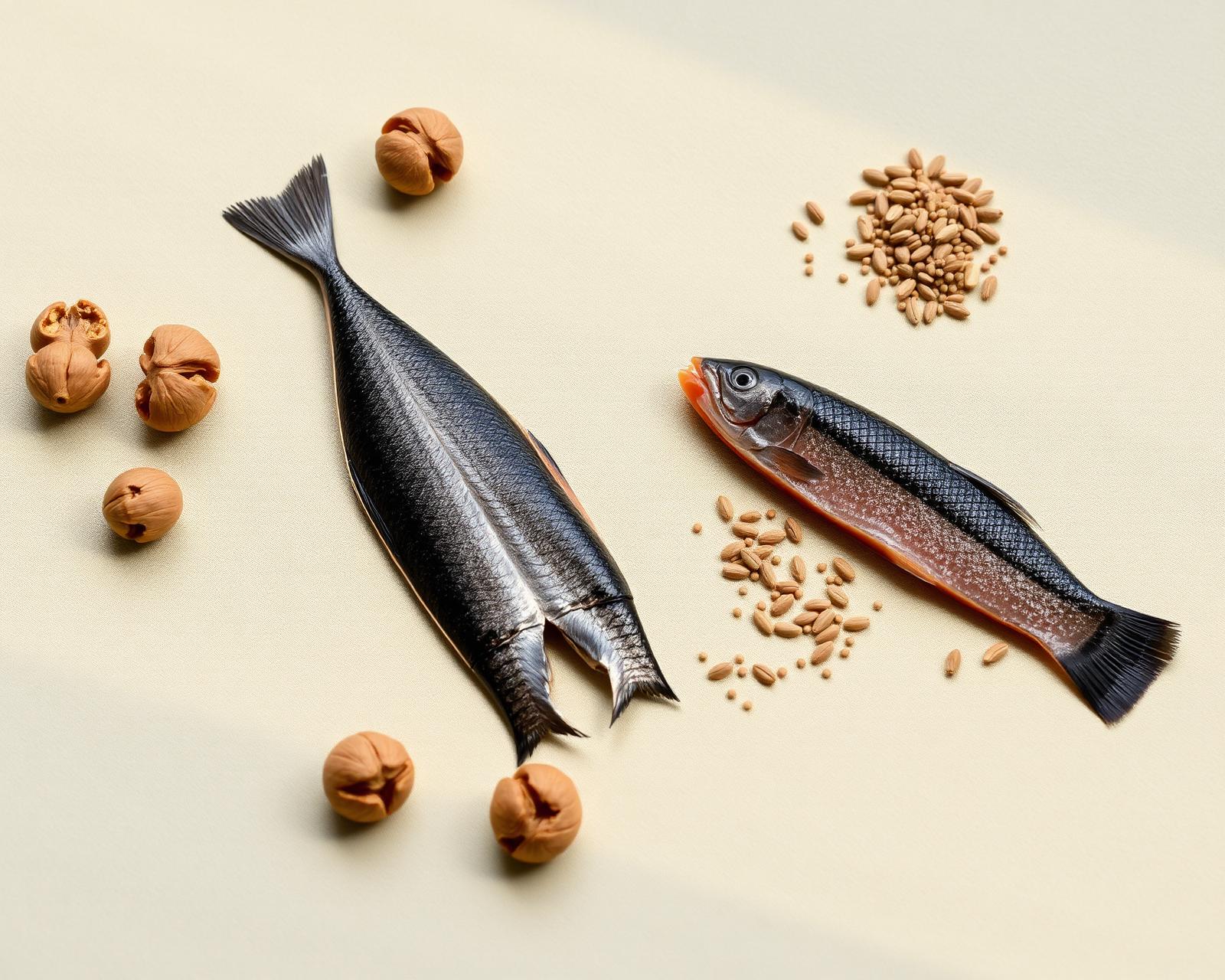
Oily fish (highest sources)
Sardines, mackerel, herring, salmon, anchovies and trout.
Plant sources (contain ALA)
Flaxseeds, chia seeds, hemp seeds, walnuts and rapeseed oil.
Small oily fish such as sardines, herring and anchovies often provide excellent nutrition with a lower environmental impact.
Omega-3 vs omega-6 — it's about balance
Both are essential fats. Modern diets often contain more omega-6 fats and less omega-3 fats. Common omega-6 sources include sunflower oil, corn oil, soya oil and ultra-processed foods.
The goal is not to eliminate omega-6 fats. The goal is to improve overall balance.
Simple ways to increase omega-3
- Eat oily fish twice weekly
- Add ground flaxseed to yoghurt
- Sprinkle chia seeds onto porridge
- Include walnuts as a snack
- Replace processed snacks with whole foods
- Use extra virgin olive oil as your primary culinary fat
Many people eat less than one portion of oily fish per week. Even small increases in omega-3-rich foods can make a meaningful difference to overall dietary quality.
Omega-3-rich meal ideas
| Meal | Idea |
|---|---|
| Breakfast | Greek yoghurt with berries and ground flaxseed |
| Lunch | Sardine salad with olive oil dressing |
| Dinner | Baked salmon with roasted vegetables and quinoa |
| Snack | Walnuts and berries |
Omega-3 across life stages
Pregnancy
DHA contributes to normal development of the baby's brain and eyes.
Childhood
Supports healthy growth and nervous system development.
Healthy ageing
Supports brain, cardiovascular and visual health.
Signs you may not be eating enough omega-3
- Dry skin
- Dry eyes
- Low oily fish intake
- High processed food intake
- Poor omega-3 to omega-6 balance
These signs are not diagnostic but may suggest room for improvement. Your body cannot store large amounts of omega-3 fats — consistent intake is important.
"Food first. Consistently including omega-3-rich foods is one of the simplest ways to support long-term health. Small changes repeated regularly often have the greatest impact."